EXHIBITIONS AT FESTIVALS
Exhibitions at festivals represent one of the key points of the Bio Awaking project. Bio-art pieces, created within the framework of the project, will be showcased at the Kaleidoscope Festival in Novi Sad, Serbia, in the revitalized industrial quarter during September 2024, and at the Pecka Outdoor Festival in Bosnia and Herzegovina in July 2025. The main focus of this activity will be outdoor workshops in nature, complemented by various cultural events, to attract a wider audience. By presenting significant biological artworks and demonstrating their impact on the environment, additional engagement of the audience and the broader public will be pursued, aiming to raise awareness of the mutual influence that art and the environment have on each other.
Bio installations at Festivals
Bio installations will be presented at two festivals: an urban one in Novi Sad -Kaleidoscope of Culture and a rural open-door one near Mrkonjić Grad – Pecka Outdoor Festival. The partners who have laboratories and are active in the field of bio art, Kersnikova and UR Institute will offer two bio art works from their recent production that will be presented at these festivals.

Exhibition opening of Bio installations
SAŠA SPAČAL, dr. MIRJAN ŠVAGELJ, ANIL PODGORNIK (SI), ROBERTINA ŠEBJANIČ (SI) VANA GAĆINA (CRO), MILICA RUKAVINA(RS), MATEJA MARKOVIĆ (RS), VESNA OPAVSKY (RS)
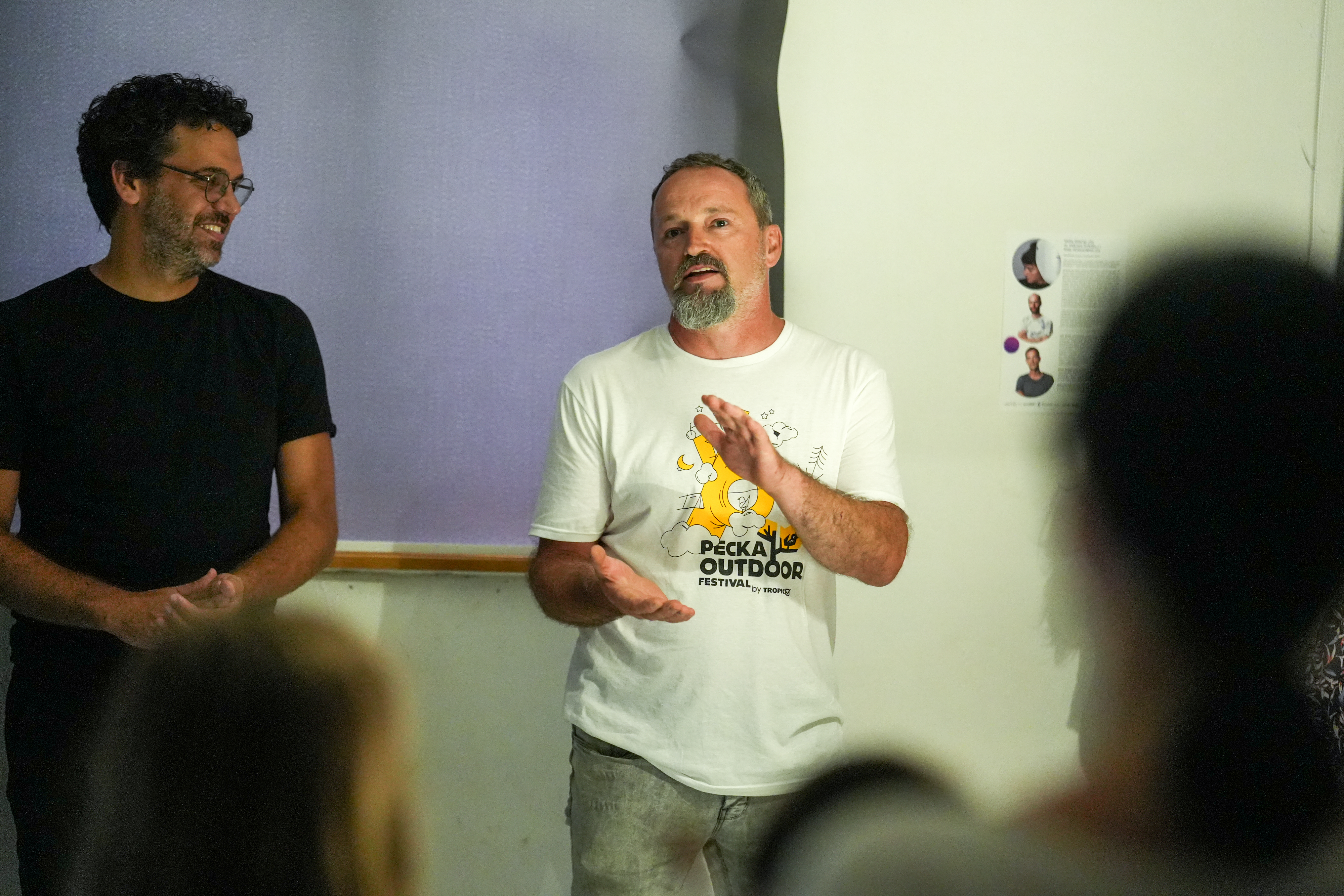
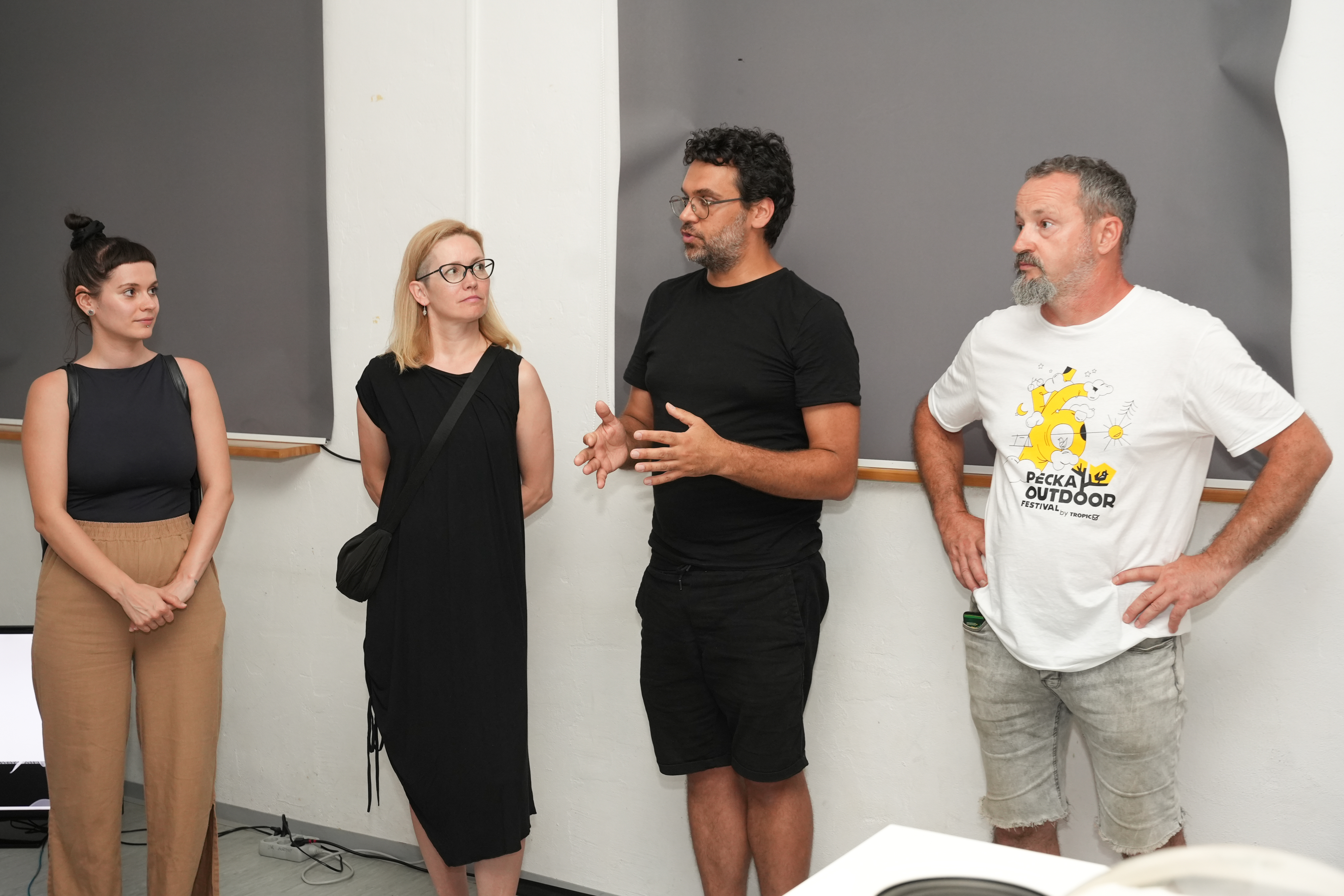
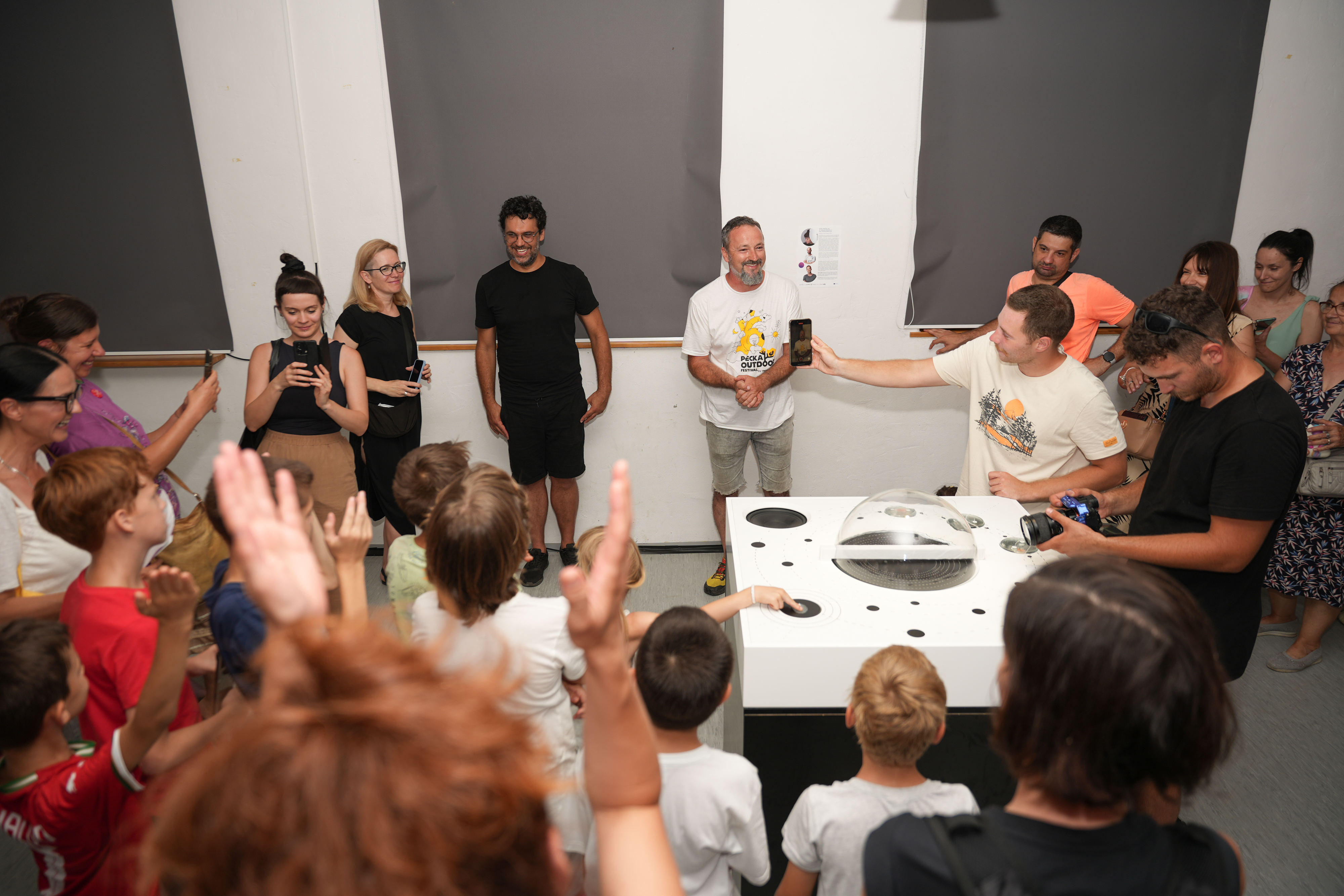
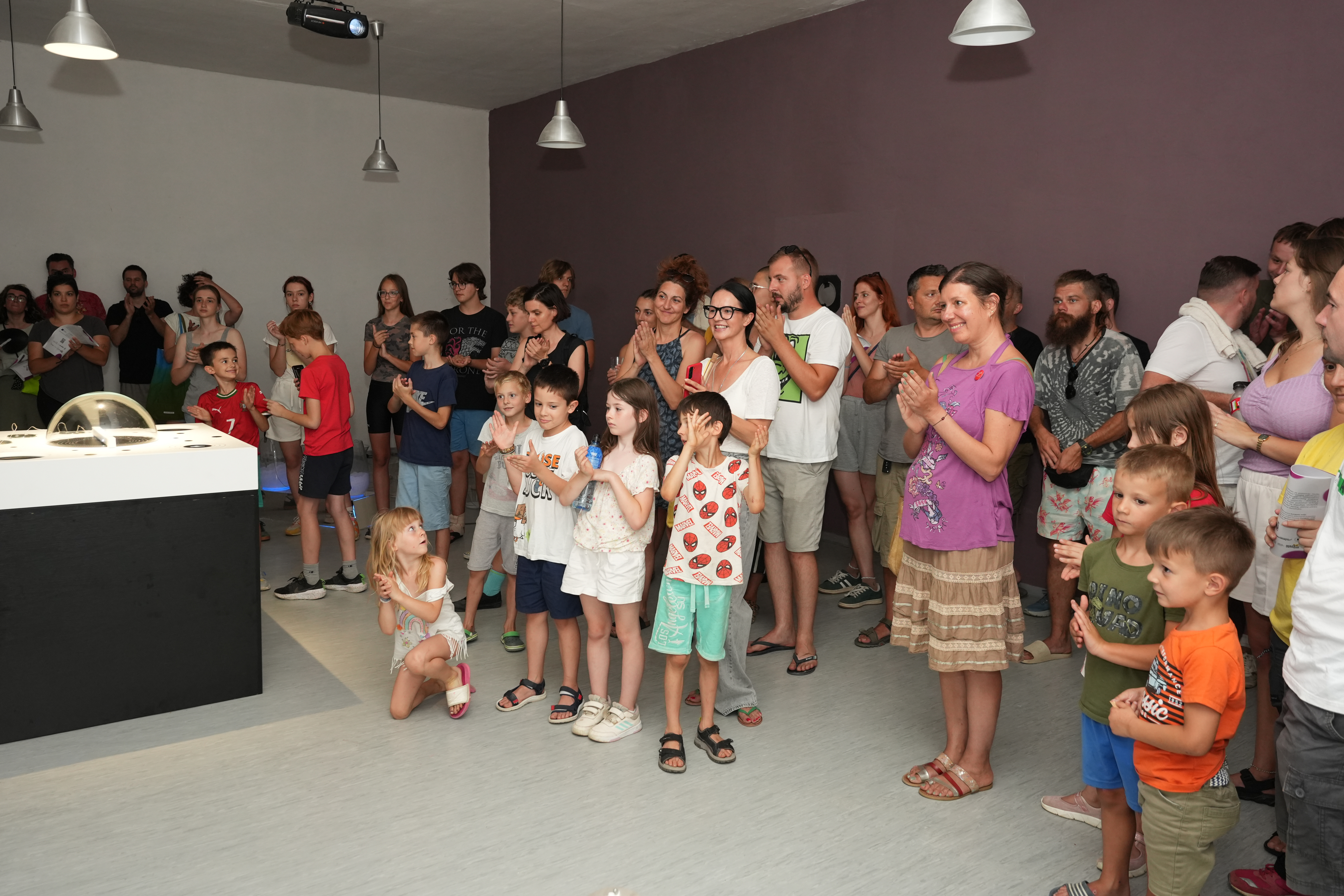
Pecka Outdoor festival
Gornja Pecka 158, Mrkonjić Grad, Bosnia and Herzegovina
Friday, 4 July 2025
18:00h
Pecka Outdoor Festival (2025)
Pecka Outdoor Festival is a multi-day open-air event held every July in the village of Pecka, in the northwest of Bosnia and Herzegovina. It was born out of a desire to revive one of the most beautiful villages in the country, connect people, and create a space for a healthy spirit, freedom of movement, and collective growth.
The village is the source of the Sana River and home to one of the best natural climbing areas in the country, as well as a network of trails for hiking and cycling. The festival is conceived as an open-door event that promotes active and meaningful time in nature through a variety of outdoor activities.
Across meadows and rock faces, around campfires and early morning coffees, the boundaries blur between artists and athletes, local hosts and travelers from all over the world. Here, art is not exhibited in galleries but in nature — as an integral part of the landscape and everyday life.
Through international collaborations, Pecka has become a host to bio-art exhibitions and open-air laboratories where artists, scientists, and curious visitors meet. It is a place where new connections, experiences, and ideas are born.

Within the Pecka Outdoor Festival, Kersnikova Institute presents Saša Spačal, postmedia artist who merges research on living systems with contemporary art, emphasizing the interconnectedness of the environment-culture continuum within planetary metabolisms. UR Institute showcases Robertina Šebjanič, an artist and researcher whose work explores the biological, chemical, (geo)political, and cultural realities of aquatic environments, examining humanity’s impact on other organisms, as well as Vana Gaćina, a media artist whose practice focuses on audiovisual expression and immersive experiences that merge technology, perception, and space. Also, the BioAwakening project proudly presents exclusively new productions created during the BiostArt program by students Mateja Marković (New Media Arts) and Milica Rukavina (Biology). Within the project exhibition, we are grateful to present our guest artist Vesna Opavsky, who was an enthusiastic and engaging participant in the second Study Visit (2025) program hosted by UR Institute in Dubrovnik, Croatia as part of BioAwaking project activity.











About the EXHIBITORS

Saša Spačal (SI), a postmedia artist, merges living systems research with contemporary art, emphasising the interconnectedness of the environment-culture continuum within planetary metabolisms. Her artistic endeavours include developing caring biotechnological methodologies and interfaces that engage with both organic and mineral soil agents. In parallel, she explores the fragility of posthuman scenarios, intricately weaving mechanical, digital, and organic logics within the realms of contemporary biopolitics and necropolitics. Her artworks have been widely exhibited and performed across numerous art spaces, museums, and festivals worldwide. Recognised for her contributions, she has also received many international awards.
Mirjan Švagelj (SI) obtained a PhD in biomedicine from the Faculty of Medicine of the University of Ljubljana. As a scientist, he works in research and development in the field of applied biochemistry and biotechnology. With his extensive scientific knowledge, he contributed to numerous art projects.Anil Podgornik (SI) is a DIY enthusiast with a great talent for electronics, mechanics and physics. As a co-author or expert, he has collaborated with Saša Spačal on various art projects.
Mycophone_unison
“We are of the universe – there is no inside, no outside. There is only intra-acting from within and as part of the world in its becoming.” – Karen Barad, Meeting the Universe Halfway
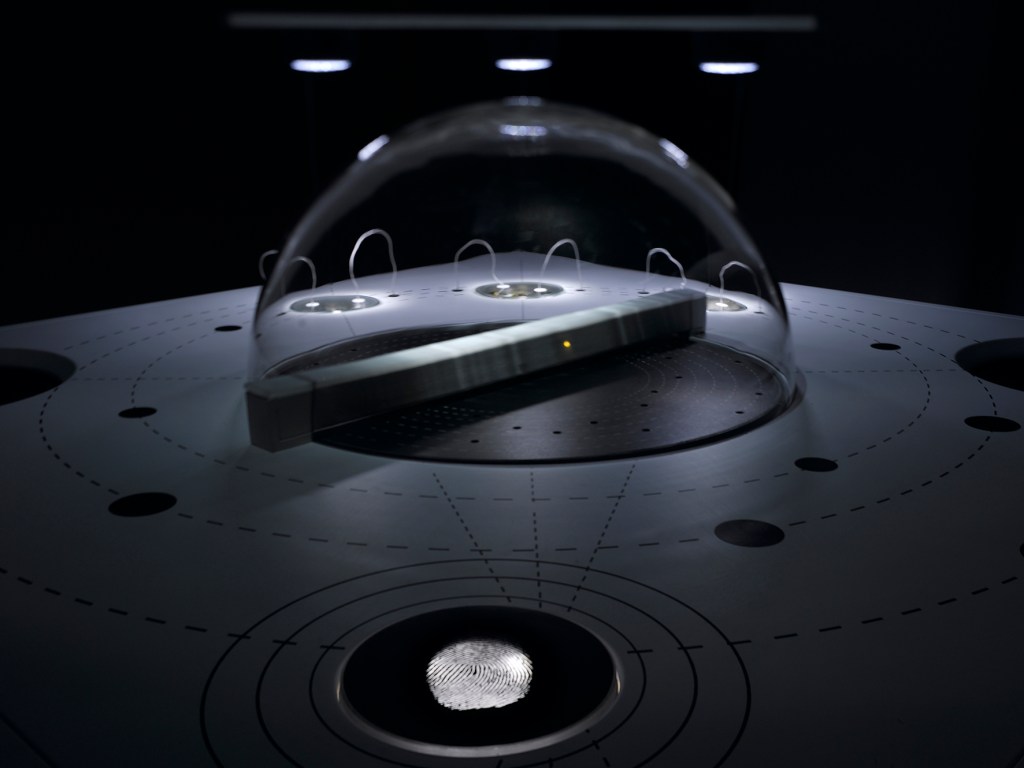
Matter as such is always defined by the point of view, but what if the body of the viewer is no longer only one? Ecological communities of microorganisms such as bacteria, fungi and archaea that constitute the microbiome of human bodies indicate the plurality of the human body that can no longer be seen as one but as many, as multiple. Multiplicity of the body does not act as one, each biological entity has its own role that is enacted in collaboration with others or on its own. Enactment defines and activates entities needed for completing the act that the environment calls for. At that moment the body emerges in intra-acting with the environment, at that moment the body becomes and is perceived as one, however its entities are always multiple and never the same in the next intra-act. Oneness of the body as such emerges only in the specific spacetime, where it intra-acts and then dissolves into multiplicity that awaits its new becoming.
“Mycophone_unison“ in the spacetime of multiplicities serves as a navigation tool. A sound map of intra-action between three microbiomes of the bodies of its makers and the viewer. By pressing the fingerprint the viewer sends a signal to the map that processes it through the central celestial plate to the microbiomes that modulate it as a sound of unison. The multiplicities of the authors are heard as one for one brief moment in the here and now.
Produced by: Multimedia center KIBLA

Robertina Šebjanič (SI) is an intermedia artist and researcher whose work explores the biological, geopolitical, and cultural realities of aquatic environments. She investigates humanity’s impact on non-human species, coining terms like “aquatocene” and “aquaforming” to describe human influence on aquatic ecosystems. Her projects promote empathetic interspecies strategies. Notable works include Aurelia 1+Hz, part of the .NewArt{collection;}_ in Spain, and aqua_forensic (with Gjino Šutić), which exposes pharmaceutical pollution in water habitats. Šebjanič has received accolades from Prix Ars Electronica, STARTS Prize, and Falling Walls. She lectures globally (e.g., Stanford, UCLA, UNAM, ISEA, KIKK), and exhibits at major venues including ZKM, Ars Electronica, Tribeca Immersive, MSU Zagreb, and La Gaîté Lyrique. Since 2023, she has been an associate professor at the University of Nova Gorica – School of Arts.
Echinoidea future – Adriatic sensing
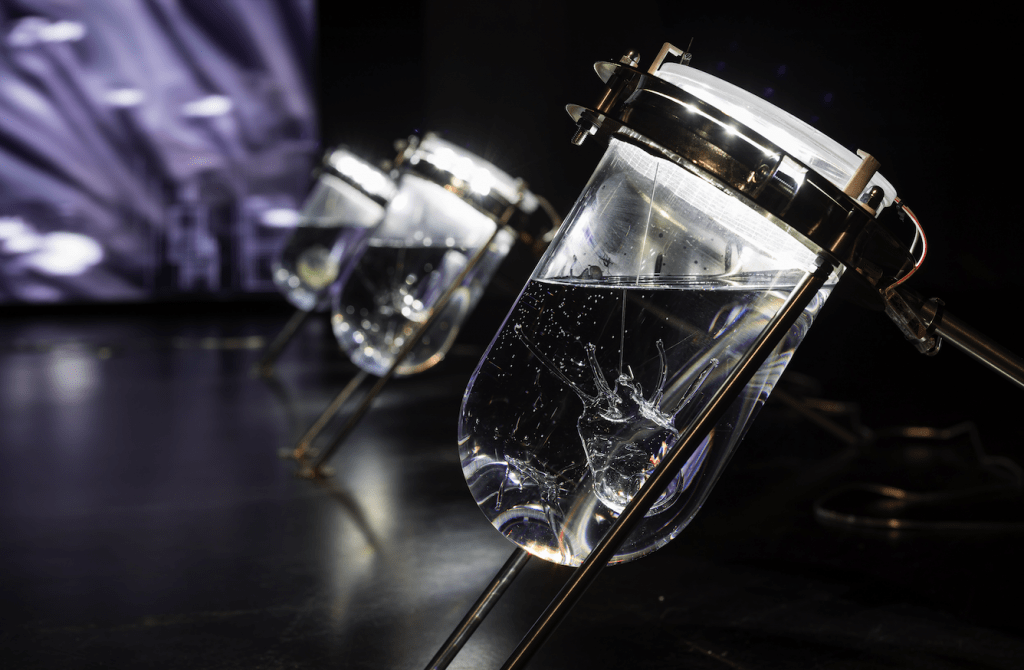
The artwork Echinoidea future – Adriatic sensing addresses the current biogeological and morphological conditions in the sea urchin environment, which is aquaformed by anthropogenic liquid waste, resulting in low oxygen levels in the seawater.
Exploring the stressors of the local/global human footprint, the project demonstrates the resilience of the aquatic species. ‘Echinoidea future – Adriatic sensing’’ acts as an activation of (sy)(e)mpathia.
The main research was carried out within The Zero Pollution Adriatic residency initiated by UR Institute in the frame of STARTS4Water and took place in the coastal region of the southern Adriatic.
“Echinoidea Future – Adriatic Sensing” explores the biogeological and morphological conditions impacting the sea urchin habitat. Anthropogenic liquid waste threatens their environment, leading to low oxygen levels in seawater. The study focuses on dissolved oxygen flux in coastal areas, revealing pollution’s profound impact on biodiversity. The ongoing dialogue prompts reflection on oceanic changes, transcending ecological concerns to address the geopolitical dimensions of the Adriatic coast.
CREDITS:
The Echinoidea future – Adriatic sensing
Artist (concept, sound & video editing, execution): Robertina Šebjanič
Video support A.I.: Tanja Minarik
Scientific advisory: dr. Alenka Malej, dr. Matjaž Ličer; UR Institute: Gjino Šutić, Filip Grgurević; Institute for Marine and Coastal Research University of Dubrovnik: dr. Marijana Hure, dr. Valter Kozul
Production: UR Institute
Production support: Zavod Sektor, PiNA, Miha Godec, Ivanka Pasalic (Glassblowing), David Drolc (Metal construction)
Special thanks to: Martina Gluhan, Marjan Žitnik
*The Zero Pollution Adriatic was commissioned by UR Institute within the framework of STARTS4Water, funded by S+T+ARTS, an initiative of the European Commission, launched under the Horizon 2020 research and innovation program.
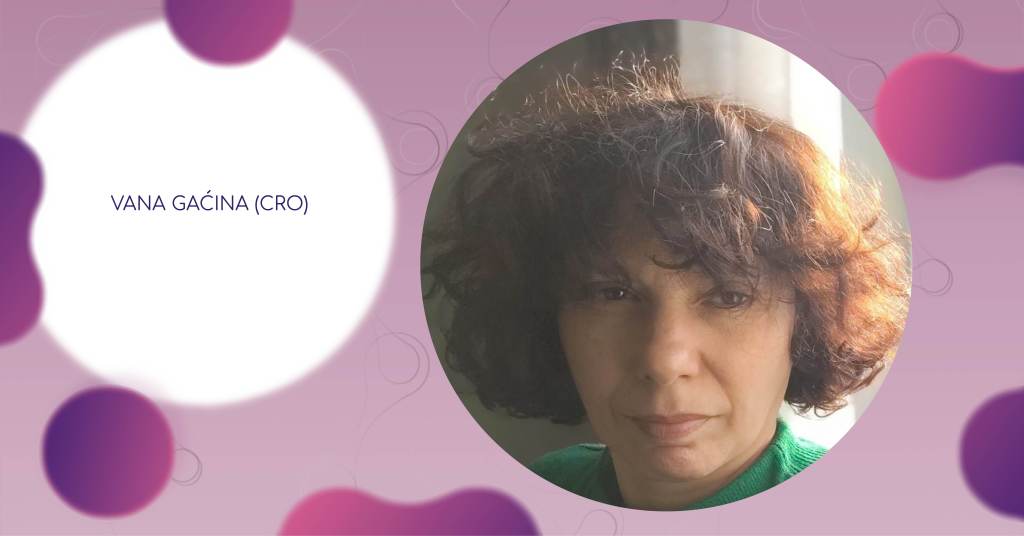
Vana Gaćina (CRO) is an independent artist based in Zagreb, whose work focuses on both the theory and practice of new media art. She earned her degree in painting from the Academy of Fine Arts in Zagreb and completed her MA in Video at the Academy of Fine Arts in Ljubljana.
Her artistic practice is primarily centered on multimedia installations that explore the intersection of art and technology. She is currently pursuing a PhD in Fine Arts and AI in Ljubljana, where her research examines the extent to which automated algorithmic processes influence aesthetic creation and everyday choices, as well as their impact on the development of contemporary culture.
She is the author of numerous new media art projects and exhibitions, and a member of HDLU and HZSU.

The Sound of Salt
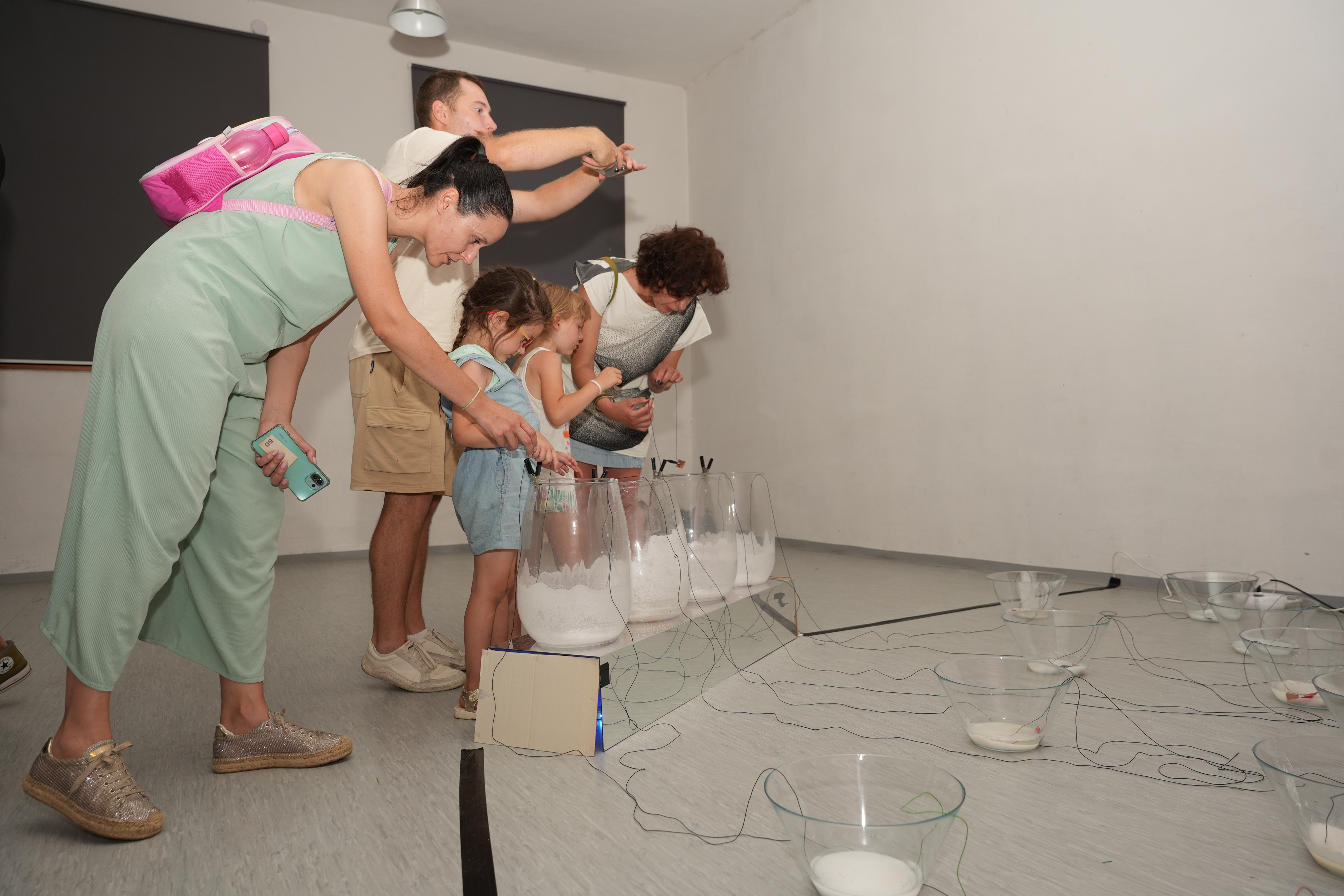
The Sound of Salt is a multimedia sound installation that merges salt, water, and metal into a living system, where light and sound emerge through electrochemical transformation. At its core lies a handmade battery powered by saltwater, generating unstable, flickering light that responds to environmental changes. This light becomes data, activating a spatial soundscape — a fragile, organic ecology of perception.
Through interactivity and the use of salt as both symbolic and functional material, the work explores the boundaries of sensation, experience, and cognition. Salt is not merely a substance — it is a carrier of Adriatic biological changes, a source of energy, and a sign of the deep entanglement between nature and culture. Soundscapes generated through salt crystals function as sculptures that produce electricity and light, allowing visitors to shape their own auditory experience.
Inspired by early bioelectrochemical experiments such as Galvani’s, the installation does not mimic nature but collaborates with it. In a time of ecological crisis, The Sound of Salt becomes both a poetic and political act — an invitation to listen, to feel, and to reconnect. Rather than framing climate change as catastrophe, the installation creates a contemplative space where science, technology, and sensitivity merge into a meditation on new possibilities for a sustainable future.
Acknowledgments:
Photography: Josip Bolonić Joža
Sound programming: Miodrag Gladović Mijo
Development support: UR Institute, Tomislav Popijač, Tanja Minarik
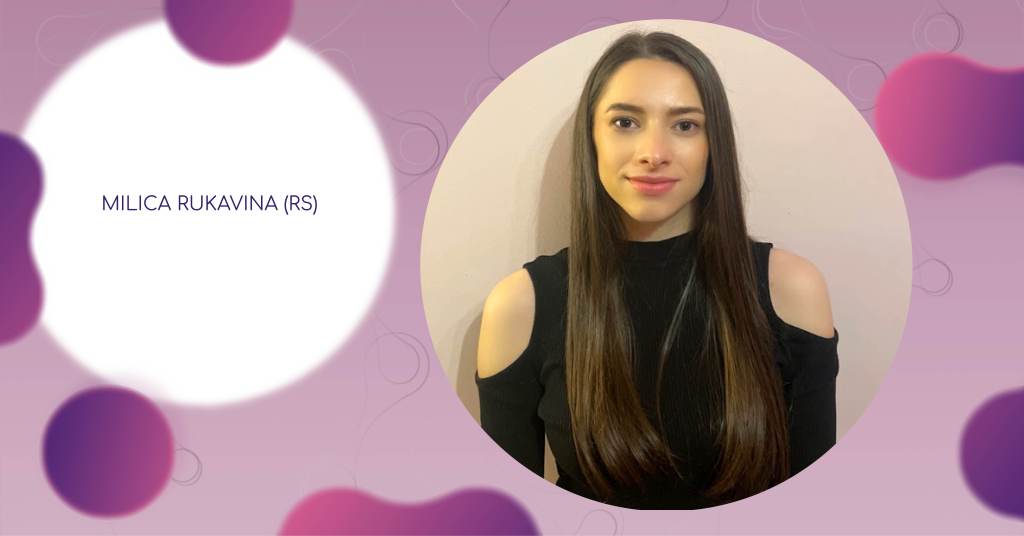
Milica Rukavina (RS) is from Subotica and is 25 years old. She is a student at the Faculty of Sciences, University of Novi Sad, specializing in Biology. Her passion for microbiology dates back to high school, where she participated in various biological science competitions. In her fourth year of studies, she had the opportunity to approach science from a different perspective by working on a bioart project. The perspectives of artists at that time opened new possibilities for her to explore the science she studies and its close connection to art. Motivated by many artists and scientists, she eagerly joined the BioAwaking project, which inspired the creation of her project titled “Box of Realities.”

Box of Realities
The project Box of Realities explores the invisible yet ever-present microorganisms in everyday life, with a particular focus on the world of mold (micro)organisms and our relationship to it. This project originated from a workshop within the BioAwaking initiative, which encouraged me to reflect on the presence of mold in our homes—often unnoticed and unrecognized—and on the possibility of making this presence visible through art and science.
The core idea of the project is to reveal to visitors a process that usually goes unnoticed but occurs in every space of our lives. In my project, I present objects such as a pillow, a white T-shirt, a towel, a kitchen glove, and books—all in various stages of mold contamination. This is an attempt to more closely illustrate the connection between us and mold, which shares our homes just as much as we do. The selected objects are indispensable in our daily lives, just as mold spores reside on them.
Production of the project BioAwaking, Bio stArt program 2025.

Mateja Marković (RS) completed his undergraduate studies at the Faculty of Fine Arts in Belgrade, Department of New Media, where he is currently pursuing a master’s degree under the mentorship of Professor Vladimir Nikolić. He received the Telekom Award for Best New Media Work in 2024. He has participated in numerous group exhibitions and projects, including “Stavovi i Forme 2” at the Museum of Contemporary Art of Vojvodina, BL ART Festival 2024 “Sex and Politics” at DKC Incel in Banja Luka, and “These roots are made for walking” at Kunsthalle Herbsthausen in Gartow, Germany. He is a member of the artistic collective “The Radical Boyz” and the duo artistic group “Ćelija,” a finalist of the BioStArt program by ReAktor NGO.
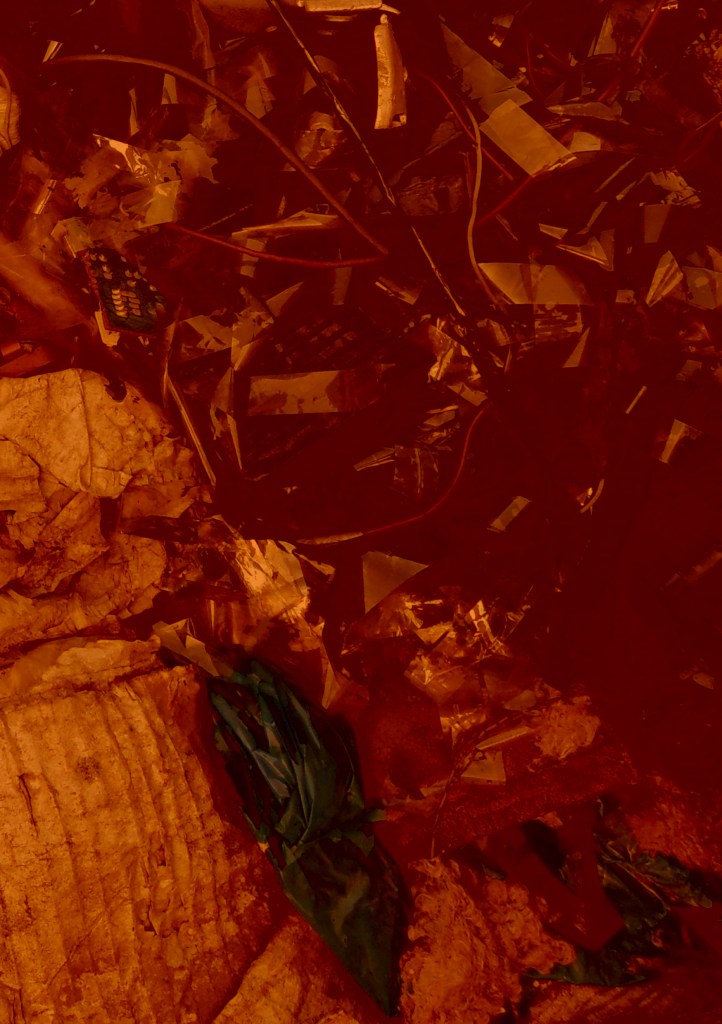
Kill Count
“Kill Count” is a research in progress. It is a product of artistic research in the domain of Bioart and scientific research in the domain of biology and bioethics. Through a series of interviews with scientists and fellow artists I’ve gathered different views on life and how we treat it. “Kill Count” became an umbrella term for a much wider range of topics. This work is a snapshot of my current thoughts, questions and dilemmas.
Production of the project BioAwaking, Bio stArt program 2025.
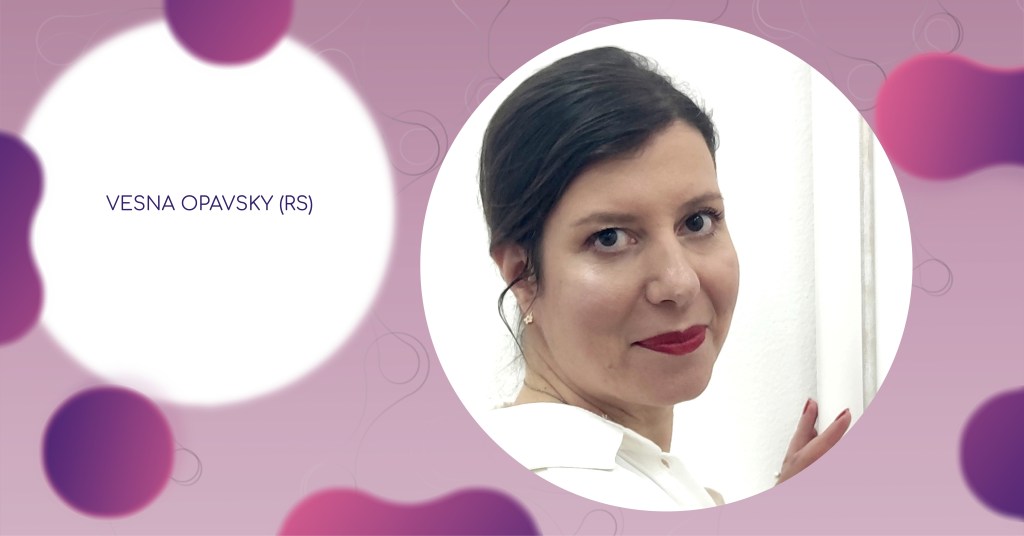
Vesna Opavsky (RS) is an artist known for her distinctive artistic expression that combines ecological themes with contemporary visual approaches. In creating her digital graphics, she blends watercolors, original photographs, cyanotypes, and materials from nature. Through subtle transitions between the real and digital worlds, she merges ecology, community, and art through participatory projects, focusing on issues in contemporary society stemming from urban environments. She earned her PhD from the Faculty of Fine Arts in Belgrade.

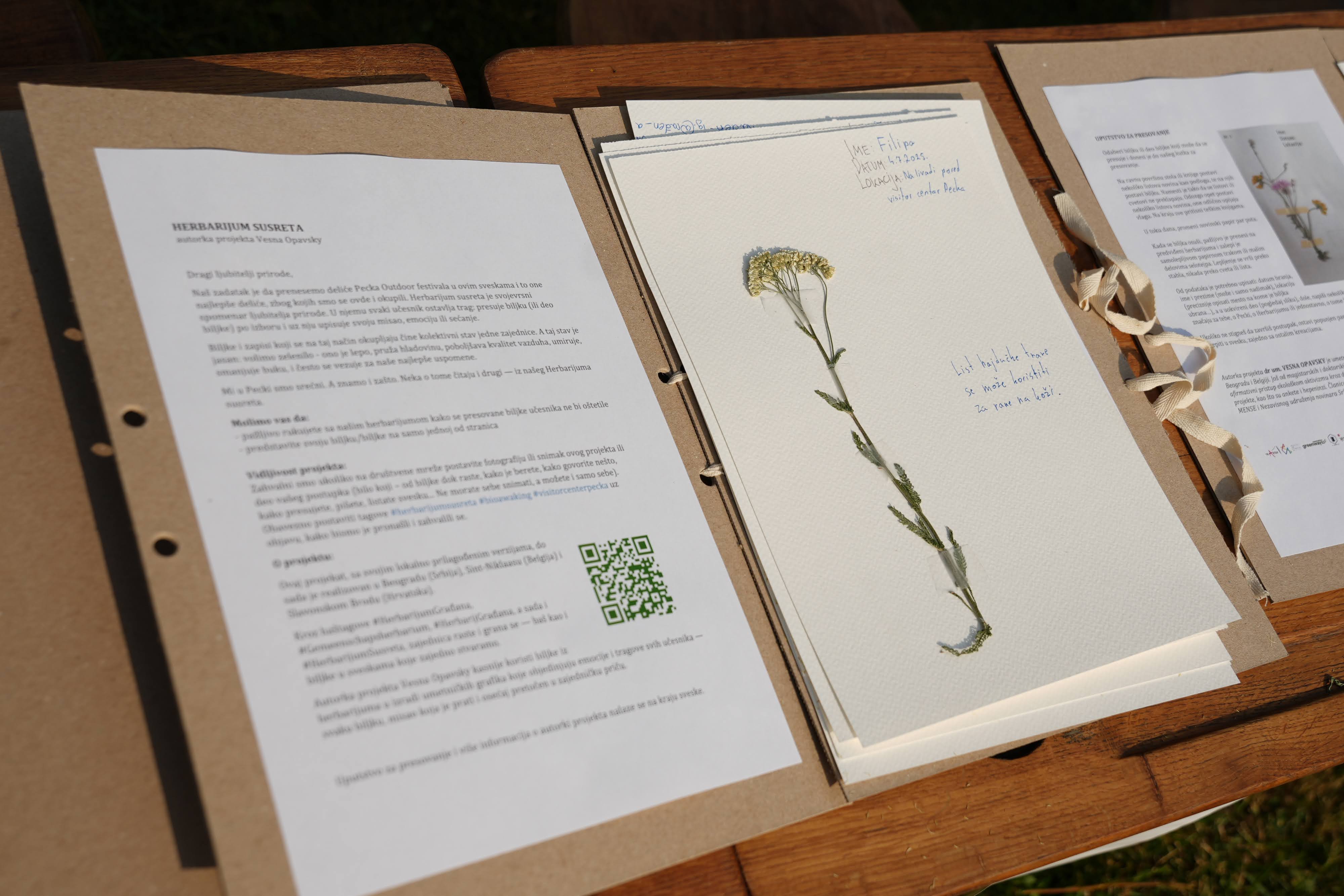
The herbarium of encounters
The herbarium of encounters is an artistic-ecological project by Vesna Opavsky, realized at the Pecka Outdoor Festival. Visitors choose a plant from nature, press it, and leave a trace in the shared notebook – the herbarium. Each plant and note become part of the collective memory and a shared message of love for nature. The digital records of these pressed leaves, as well as the artworks Vesna later creates from the collected plants, can be followed on social media through the hashtag #Herbarijumsusreta.
Exhibition opening Bio installations and BioTehna Mobile Laboratory
Exhibiting artists: DR MARGHERITA PEVERE (IT/DE) & ZORAN SRDIĆ JANEŽIĆ (SI)
Kaledioscope of culture
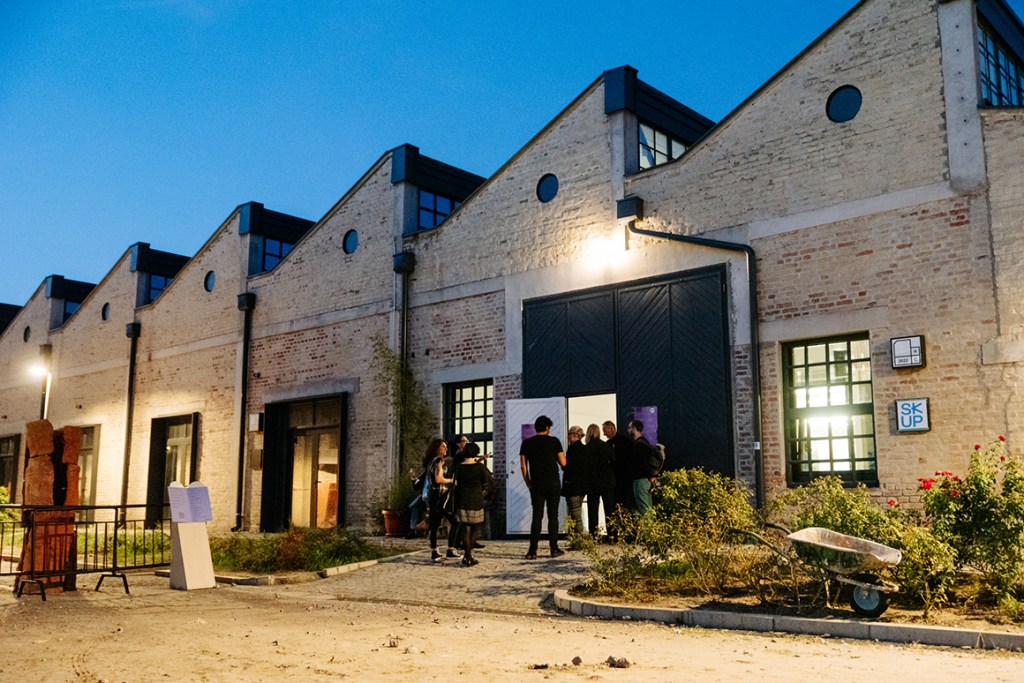
SKUP, Creative District, Novi Sad, Serbia
Bulevar despota Stefana 5.
Friday 20 September
19:00 – 20:00h
Kaleidoscope of Culture (2024)
Kaleidoscope of Culture is a festival that emerged from the program of European Capital of Culture Novi Sad 2022 as a legacy program. Its aim is to create a city as a stage for showcasing art practices in different fields of art – performing art, visual arts, architecture and design with the focus on participatory practices. The festival lasts for one month and is implemented in different city areas. Being well attended and promoted the festival brought a high reach of audiences and therefore is suitable to showcase bio art practices developed through this project.
Within the festival Kaleidoscope of Culture, Kersnikova Institute presented Zoran Srdić Janežič, a multifaceted artist known for sculpture, intermedia art, and puppet design. UR Institute also presented Dr. Margherita Pevere, an artist and researcher renowned for her visceral approach in biological arts and performance, blending biotechnology, ecology, queer studies, and death studies.





About the artists
Zoran Srdić Janežič (SI) is a sculptor, intermedia artist, and puppet designer. In his artwork he uses new materials and technologies: animatronics, 3D virtual design, and animation, moving mechanisms in combination with biological systems and biotechnologies. He has had more than 20 solo exhibitions and has participated in numerous group exhibitions and residencies in Slovenia and abroad (Ars Electronica Festival in Linz, Bozar in Brussels, Centquatre in Paris). Some of his sculptures are part of permanent collections in prominent galleries. He has received awards for his sculptural work as well as designed a permanent public monument, and was selected for the S+T+ARTS residency program.


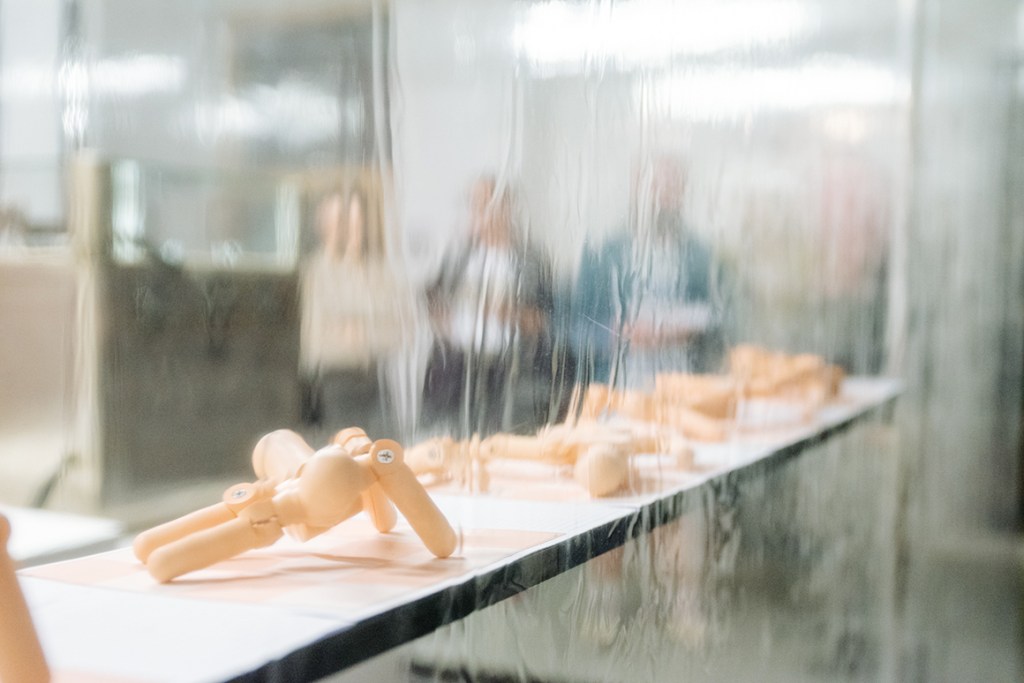
The heart of the Biobot project lies in developing various robot forms at the intersection of biotechnology, AI, and hardware. The artwork aims to design a bio-cybernetic moving body that combines biological components with mechatronics and AI. This synergy is crucial not only for converging scientific and artistic fields but also for exploring ethical and philosophical challenges in living beings coexisting with robots. Biobot offers a performative experience and mental space in which the concept of extended bodies points to the possible forms of coexistence between humans and technology.
Using biotechnological procedures, stem cells from the author’s tissue are differentiated into neurons in the lab, growing like a brain on a chip on a multi-electrode field (MEA). These signals are amplified and converted from analog to digital via OpenEphys software. With computer algorithms like RoboGrammar, signals from the primitive brain on the chip are used to design and control a robot in a performative situation.
Credits:
Bioengineering: Kristijan Tkalec (BioTehna Lab), Prof. Helena H. Chowdhury, PhD (Laboratory for Endocrinology – Molecular Cellular Physiology, Faculty of Medicine, University of Ljubljana) | Expert assistance: Martina Perše, PhD (Medical Experimental Center, Faculty of Medicine, University of Ljubljana | AI programming: Benjamin Fele | Biosensing electronics, programming: Erik Krkač | Electronics, PCB design: Gregor Krpič | 3D design: Cveto Kuneševič | Partner: Kambič Laboratory Equipment
Produced by: Kersnikova Institute – Kapelica Gallery and Laboratory for Artificial Life as part of konS ≡ Platform for Contemporary Investigative Art | Exhibition at Kaleidoscope supported by: EU – Creative Europe, Ministry of Culture of the Republic of Slovenia, City of Ljubljana

Dr Margherita Pevere (IT/DE) is an internationally acknowledged artist and researcher working across biological arts and performance with a distinctive visceral signature. Her inquiry hybridizes biotechnology, ecology, queer and death studies to create arresting installations and performances that trail today’s ecological complexity. Her body of work is a blooming garden crawling with genetically edited bacteria, cells, sex hormones, microbial biofilm, blood, slugs, ash and decomposing remains. She co-founded the artists’ group Fronte Vacuo. She is member of the Finnish Bioart Society and The Queer Death Studies Network.
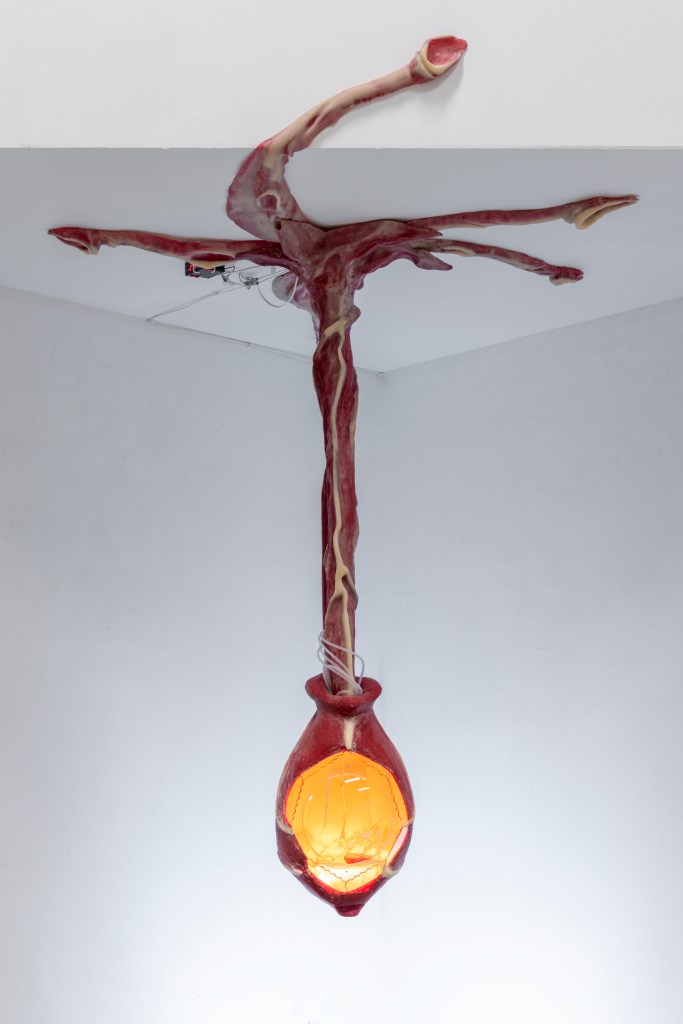
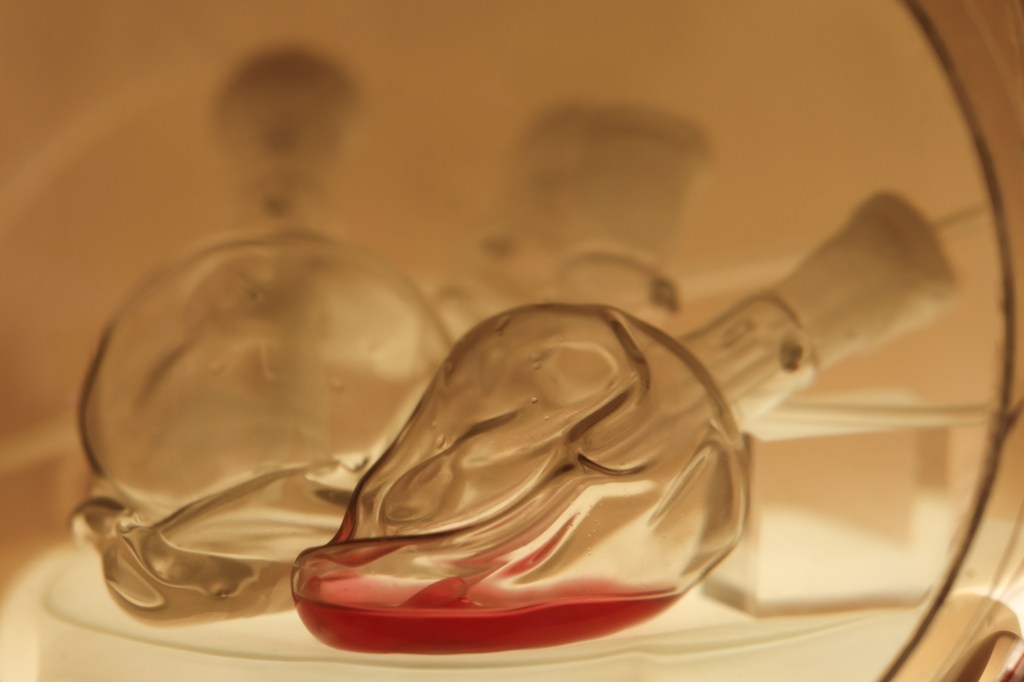
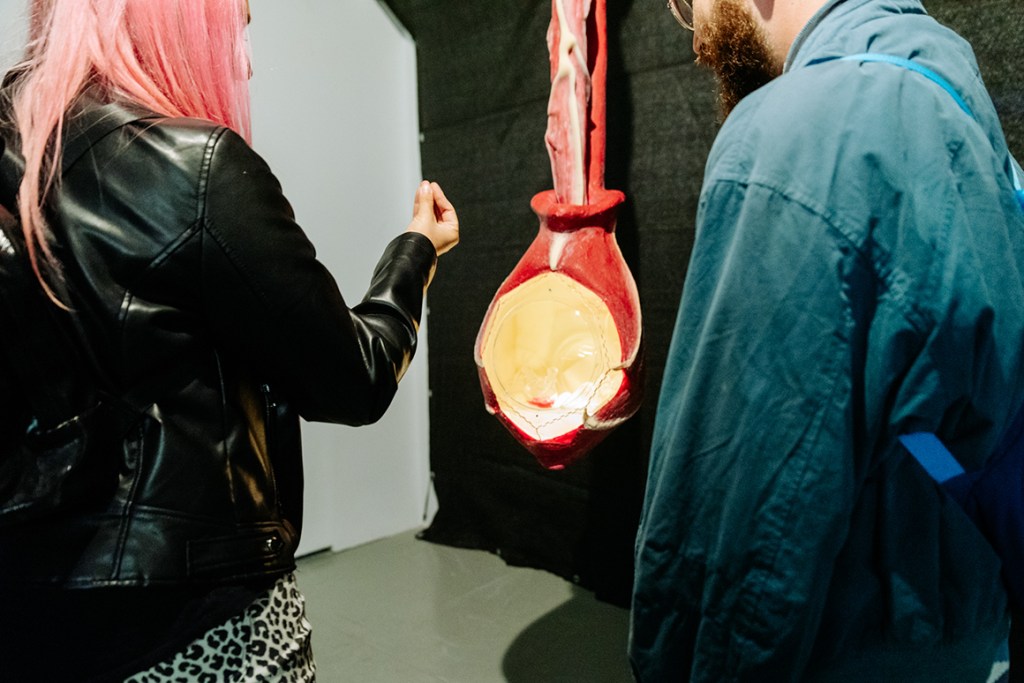
The series Wombs meditates on sexuality and hormonal contraception from an environmental, more-than-human perspective rather than as experiences enclosed in one’s own body, while reclaiming the importance of hormonal contraception and therapy.
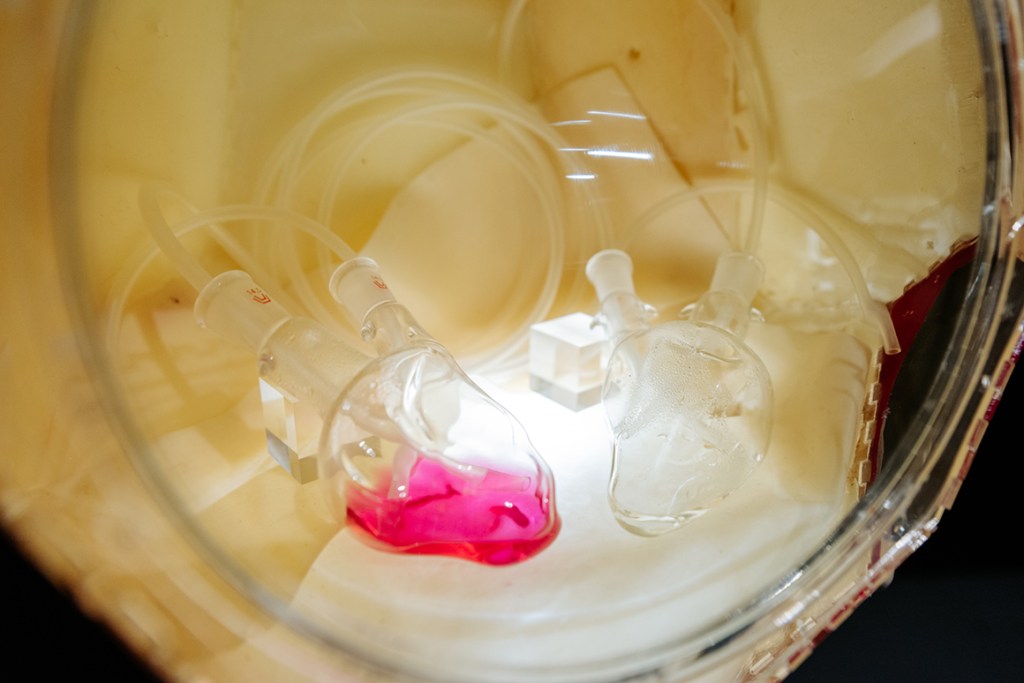
In the installation W.02, slugs are hermaphroditic allies in the exploration of inner and outer ecologies of fleshy desire. Its chimeric, organ-like incubator hosts two cell cultures in a hybrid ecosystem. The artist’s own vaginal epithelial cells and slug egg cell share growth medium, communicate chemically through it, and stage a dance of the two organisms at a cellular level.
Credits
Wombs is an artwork series by Margherita Pevere.
W.02 was realised within the framework of the European Media Art Platforms EMARE program at KONTEJNER | bureau of contemporary art praxis, co-funded by the Creative Europe Programme of the European Union. Biotechnological advisor: Gjino Šutić – UR Institute
Support

The Creative Europe program of the European Union supports activities that promote cultural diversity and respond to the needs and challenges of the cultural and creative sectors. The main objectives of the program are to safeguard the competitiveness and economic potential of the cultural and creative sectors, particularly the audiovisual sector. The program’s new approach will contribute to the recovery of these sectors by supporting their efforts to become more inclusive, digitalized, and sustainable in their environment.
The project is co-funded by the Creative Europe program of the European Union under grant agreement No. 10112849. The views and opinions expressed are solely those of the authors and do not necessarily reflect the views of the European Union or the Education, Audiovisual and Culture Executive Agency (EACEA). Neither the European Union nor the funding body can be held responsible for them.
Funded by the European Union. Views and opinions expressed are however those of the author(s) only and do not necessarily reflect those of the European Union or the European Education and Culture Executive Agency (EACEA). Neither the European Union nor EACEA can be held responsible for them.

 ReAktor